Bagan, Balloons, Bees, and Bargaining

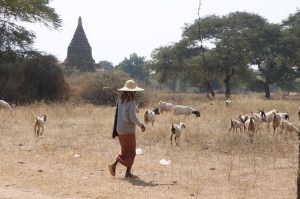
I have been searching for a place where life is simple and moves at a slower pace. A place that is still fairly innocent, where the modern world hasn’t “spoiled”. I found it in Bagan.

BAGAN
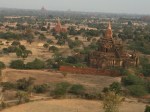
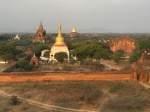
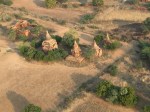
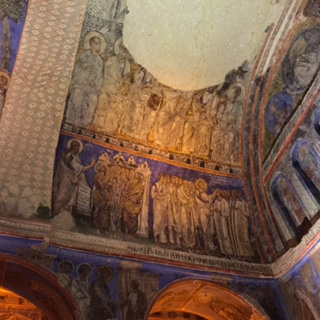
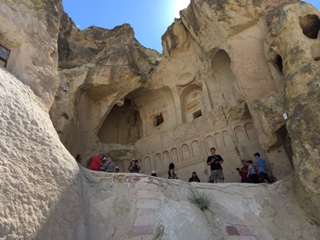
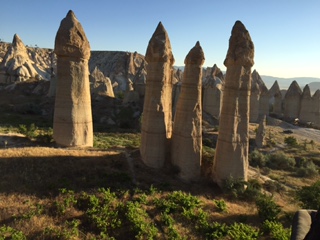
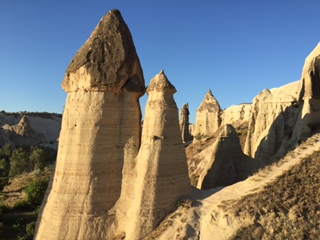
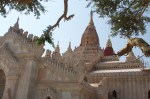
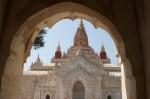
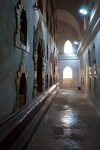
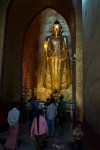
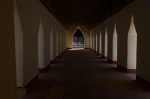
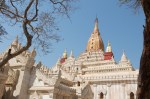
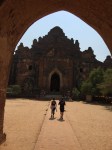
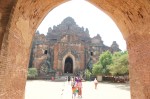
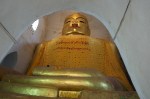
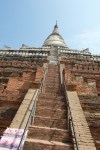
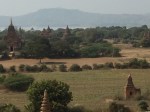
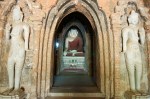
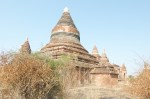
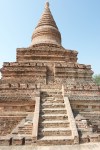
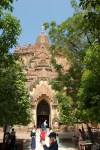
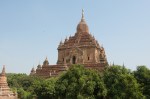
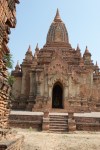
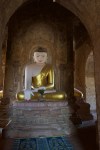
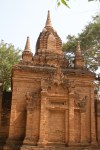
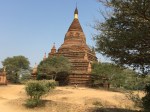
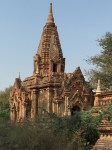
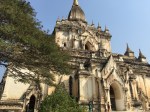
Bagan is an ancient city, dating back to the 9th century when it was the capital of the Kingdom of Pagan. Today three small cities make up the former flourishing capital; New Bagan, Old Bagan and Nyaung U. In and about this tri-city area lies over 2500 temples left over from 10,000 or so built between the 10th and 13th century. Big temples that scrape the sky, tiny temples smaller than a drive-up coffee stand. Ornate temples, simple and plain temples, temples built in a few months, others constructed over decades. Single entry temples with a single Buddha, four sided temples with a Buddha facing each cardinal directions. Like snowflakes, each one unique and different.

BALLOONS
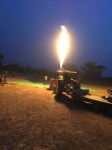
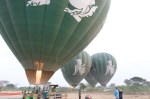
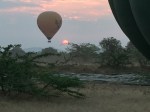
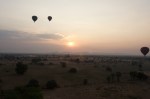
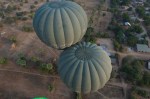
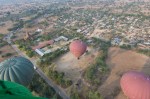
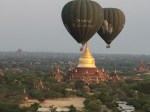
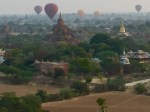
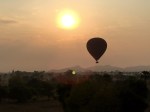
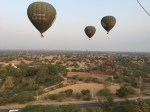
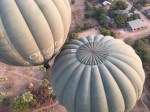
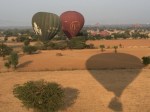
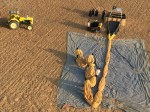
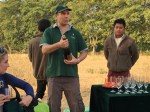
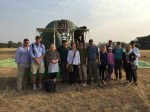
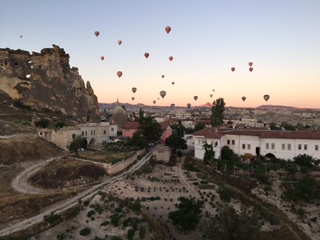
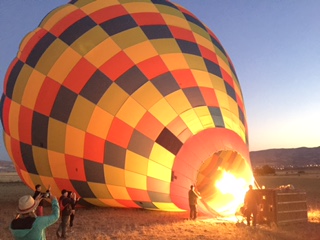
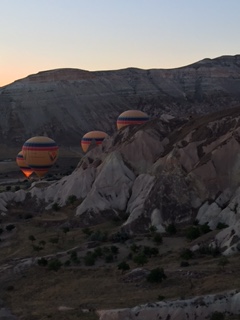
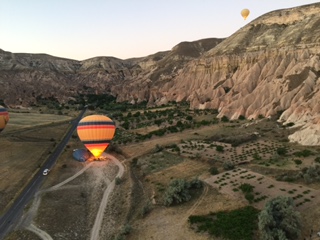
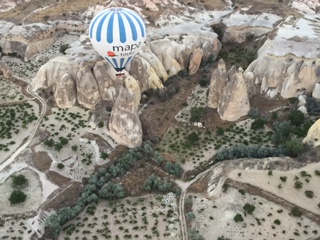
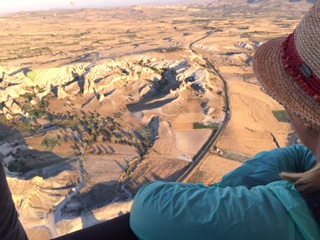
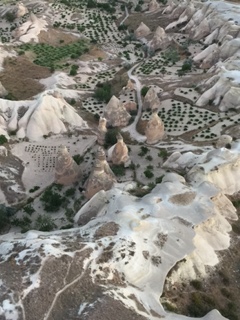
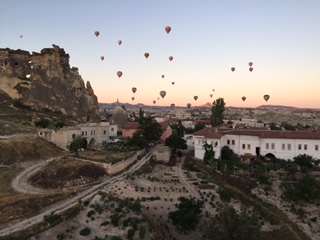
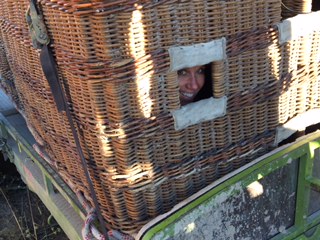
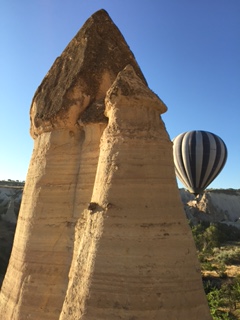
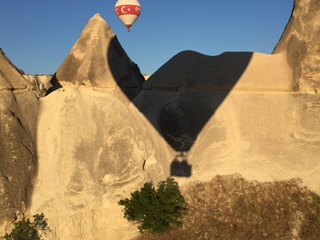
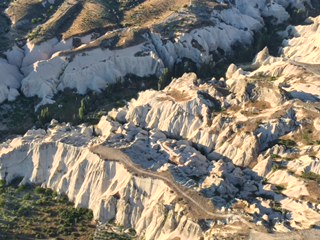
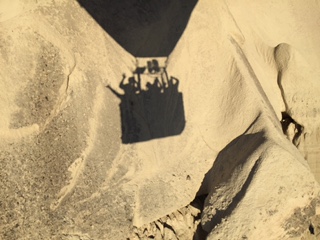
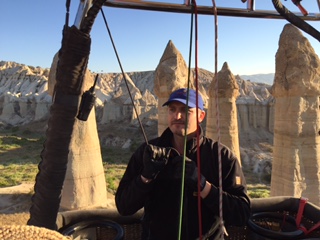
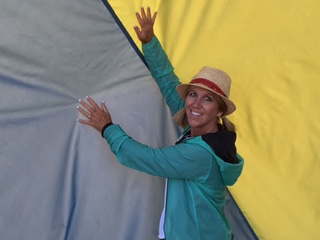
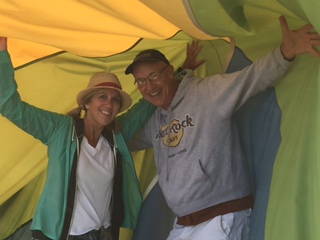
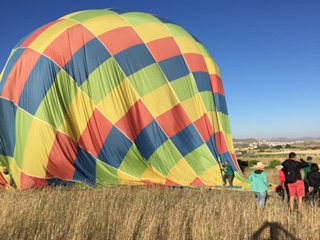
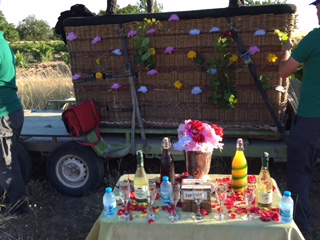
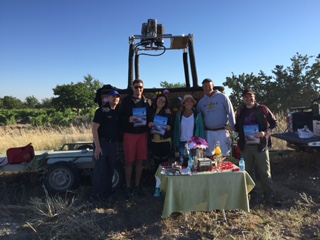
If you google BEST BALLOON FLIGHTS IN THE WORLD and compare the sites, you will find many of the same places…..Cappadocia, Turkey; The Serengeti, Tanzania; Gstaad, Switzerland; Loire Valley, France; Monument Valley, Utah; and Bagan, Myanmar. I booked a flight with Oriental Ballooning and it was worth every penny of the almost $400.00 fee. It was one of the most surreal experiences I have ever had. Up bright and early, the van picked me up and brought me to the staging area. I was escorted to a beautifully draped table where I joined my balloon mates and shared coffee, tea and pastries. While we got to know each other, the worker bees readied the balloons for flight. The pre-flight preparation was a show in itself. The burners in the baskets were all fired and prepped….the flames lit up the dark, morning sky. The balloons were laid out, lines hooked to the baskets, and big fans begin to fill the balloon, the basket was then tipped on its side and the burners roared to life sending hot air into the cavernous mouth of the balloon. The pilots then gave us our safety talk and we climbed into the basket. With a massive roar of the burner our balloon slowly, ever so slowly, lifted. I think I know how astronauts feel, that sense of weightlessness. It is truly dreamlike as we silently flew over these amazing temples. We felt like voyeurs looking down at the little villages spying goats being herded, laundry being hung, children walking to school. We flew up to dizzying heights and down so low we scraped the top of trees. We watched the sun come up and a flock of white herons fly between us and the ground. Our balloon was last to land, almost an hour and a half after take-off. Our intrepid pilot led up to a hastily set-up circle of chairs where we enjoyed the traditional champagne toast. We all left rather giddy, not because of the champagne, but because, for a short while, we soared like birds high above the world. Simply one of the most satisfying adventures I have ever experienced.

BEES AND A BRUSH WITH DEATH
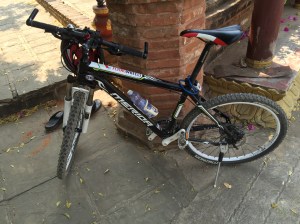
During the day I explored the temples with the help of my trusty little mountain bike.
IMG_3746

I came across a lonely single track trail that had my name on it. It ended at a beautiful little temple.

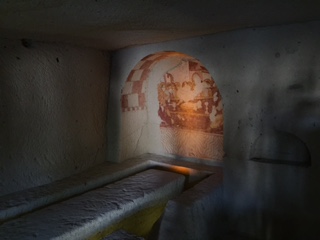
There I was, a temple all to myself, no one around for at least a quarter mile. The sun was shining, a light breeze keeping all cool. I respectfully left my flip-flops at the edge of the temple and entered. A simple seated Buddha greeted me. To my right I noticed a small stairway leading to the level above. Who could resist???
DSC_0377

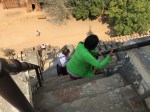
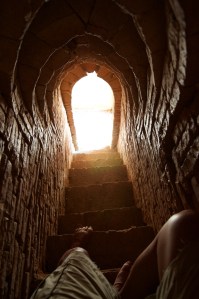
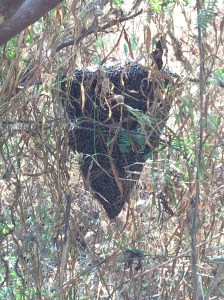
Now, remember, when these temples were built there probably weren’t many people 6 ft 4 inches tall…so I crouched over and carefully crept up the tiny passageway. Near the top there was a sharp bend to the left. With head down and nearly crawling on hands and knees I navigated the final five steps. Only when I heard a massive buzzing sound did I realize my backpack scraped a large honeybee nest (similar to the one pictured below) hanging just inside the exit of the stairs.
IMG_3734

As fast as my rickety legs could carry me, I jumped as far away as possible. You see, Malaysian Honey Bees carry a wicked sting. And when they sting they emit pheromones which prompt other bees to attack. Each nest can hold thousands of these little devils. I do not know how I did it, but I escaped without a single sting. While ever so lucky and thanking Buddha and every deity I knew, I quickly realized myself in another predicament. Seems this temple was built with only one passageway to the upper level. The only way down was through the same stairwell. I had to go under the bees to get out.

After 30 minutes or so, the bees calmed down and returned to their honey comb. I took my backpack off and ever so slowly, painfully slow, I did the best imitation of a little child bumping down the steps on their bums. Bump, bump, bump….goodbye honey bees. Thank you for sparing me!!!

BARGAINING WITH AN EXPERT

Everywhere in SE Asia, you will find the postcard hawkers. Beautiful pictures of the area where you are visiting up for sale. Bagan is no different. In front of most of the larger temples you will find people selling postcards and arts and crafts. The game begins. You receive an over-inflated price and you counter 50% lower, back and forth it goes until eventually you come to the bottom line. I usually hold my own in these negotiations, that is, until I met the master bargainer.

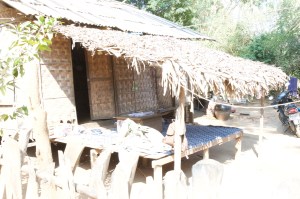
I took a dusty road down to the banks of the Irrawaddy River, and there was this little girl, probably about five years old. She was still in her school uniform and was carrying a small little satchel.
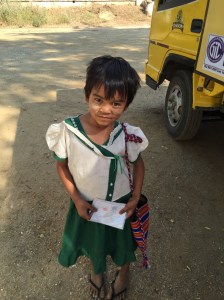
IMG_3798

Out of her bag she took out a plastic sheet with four homemade “post cards” and said, “Hey Mister, would you like a postcard?”
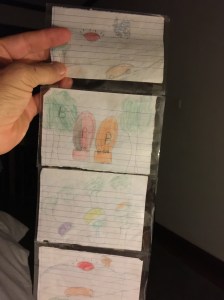
IMG_3805

I said, “How much?”

“Two Thousand Kyat” (about $1.50 USD)

I countered with, “One thousand”

A shake of the head and, “Two thousand”

“Oh no”, I said. “One thousand!!!!”

She then gave me her final offer. “Two thousand or no postcards”

I caved…she had my heart from the moment I saw her.

She ran into her little home clutching those two bills like she just won the lottery. I am betting she is still busy making more postcards!!!

I will do one more post on Bagan in order to show off more of the temples.
I loved Ankor Wat in Cambodia, but in my book, Bagan is the place to go.
One Day in Yangon

Two countries left in SE Asia to visit…Myanmar and Laos. Chinese New Years affords me 4 days so off I go to Myanmar. My flight early Saturday morning brings me to the country’s largest city, Yangon (formerly known as Rangoon), where I hope to visit the sites, spend the night and then jet to Bagan bright and early Sunday morning.

Myanmar was Burma until the name change in 1989…the USA still doesn’t “recognize” the new name. From 1962 until 2011, Myanmar was under Military Rule, perhaps not the best for the citizens but it kept the country from getting commercialized like so many of its neighbors. To date there are no McDonald’s or Starbucks, no KFC’s or Burger Kings within its borders….how nice is that!!!! But Myanmar is on the cusp of change and before long this amazing country will be known to the world.

Foreigners are not allowed to drive in Myanmar (cars or motorcycles), but for the locals who do drive, well, it is quite an experience. You see, up until 1948 Myanmar was a British colony, and like all British colonies traffic ran on the left hand side of the road. But in 1970 all traffic was moved to the right side of the road. The reason? No one is quite sure, but two common theories exist. The General in charge, Ne Win, had a dream that the country should switch directions. Another is that Ne Win’s wife’s astrologer shared with her that the country would be better off driving on the right hand side of the road. Whatever the reason behind it, the General made the decisions and overnight the change took place. What didn’t change was the position of the steering wheel. All cars had the driver sitting on the right hand side of the car. That makes sense when you drive on the left. Now picture driving on the right hand side of the road with the driver sitting on the right hand side of the car….now try to pass a car on the highway!!!! Bizarre to be sure. Slowly, very slowly, cars are being brought in with the driver side on the left.

The currency in Myanmar is the Kyat. Right now it trades at 1200 Kyat to one US dollar. I exchanged $200.00 and the stack of 1000 Kyat bills I received was way too thick to put in a wallet!!! But most places also take US currency…..but not just any US currency. The bills must be CRISP…now tears, no wrinkles, no bends. I tried buying something with a twenty dollar bill that had a dog-eared corner and a healthy crease along the middle. NOPE, no sale. The banks won’t accept the money so the people won’t accept it. Bring only crisp money to Myanmar.

Wherever you go in Myanmar, the women, and some men, wear a creamy paste called Thanaka on their faces and sometimes on their arms and legs. This cream has been used by the women of Myanmar for over 2000 years. For those that can afford it, you can purchase jars of the cream already made up. But most buy or harvest small logs of Thanaka tree and grind the bark with a small amount water on a circular stone slab called a kyauk pyin. The paste that is created is then applied to the face and other areas of the body. It has a fragrant Sandalwood scent and it said to help control acne and promote smooth skin. It also serves as a protection from the sun and is a sign of beauty.

While the women love the Thanaka, men are addicted to Betel Nut. Everywhere you will see red blotches of spittle on sidewalks for most males constantly have a betel nut between their gums and cheek. Teeth stained red, the nut provides a little buzz, is suppose to be an appetite suppressor, and is said to expel parasites. I love trying things when visiting a new country but I passed on betel.

Yangon is a city of around 6 million people. it is much like Phnom Penh in that there are very few tall buildings, but that will change in the coming years. There are still many historical buildings from the colonial period…it is really quite a lovely city.

Here are some of the sites I visited:

Nga Htat Gyi Pagoda
This pagoda is home to the “FIVE STORY BUDDHA”, a 45 foot tall sitting Buddha. I arrived early in the morning and the sun was shining in through windows high above. This Pagoda is tucked away in a residential area and not very crowded but most impressive.

Scott’s Market
An all day market built for locals and tourist alike.

Chauk Htat Gyi Buddha
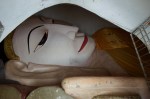
Very close in proximity to the Five Story Buddha is Chauk Htat Gyi Buddha, one of the largest reclining Buddhas in the world. It is so large it was hard to fit it into the rangefinder of the camera.

The Shwedagon Pagoda
I have toured many pagodas in my time in SE Asia, but none compare in beauty to the Shwedagon Pagoda…absolutely stunning. Towering 325 feet tall, you can see the Pagoda for miles around. At night it is all lit up and breathtakingly beautiful. They say the Buddha here is over 2600 years old. Only monks are allowed on the upper tiers of the temple, but the public can walk all around the base. I chose to visit at sunset as everything was cooler. In all temples in Myanmar you are asked to remove your shoes and this temple at noon can be a scorcher. Definitely worth the trip to Yangon just to see this pagoda.

Tomorrow morning I travel to Bagan, beautiful, beautiful Bagan.

Stages of Living Overseas

Denial and Isolation, Anger, Bargaining, Depression and Acceptance…the stages of grief first proposed by Elisabeth Kübler-Ross in her 1969 book “On Death and Dying.” Stages people go through, not always in order, not always all of them. Similiarly, there are stages to living overseas and again when repatriating. Different for everyone in duration, in order, in completion, but similar in character. A friend of ours described the stages of moving overseas as follows: the Honeymoon Stage, The Homesickness/Complaining Stage, The Coping Stage, The Acceptance Stage.

The Honeymoon Stage
You arrive. All is exciting, all is new. You are living out your dreams. You overlook the blemishes, the warts, the acne of the place. You notice the exotic beauty, the intoxicating smells, the lilt of foreign languages hitting your ears. You are drunk with the newness of it all, so different from what you are used to. Everything is a amplified…the skyscrapers so tall, the temples so ornate, the thunder so loud. You want the scream, “This is so cool, so sexy, so everything I thought it would be and more!” It is like a new relationship…you don’t notice the morning breath, no action is annoying, you are head-over-heels in love. Why didn’t I do this sooner? What was I afraid of? The world is my oyster and I’m ready to dine!!!

The Homesickness/Complaining Stage
One day you wake up and you want a bowl of Frosted Flakes. But you don’t have any. In fact, you can’t find them anywhere. No f-ing Frosted Flakes anywhere!!! And you want Frosted Flakes. They always had them at home.
You need a pair of scissors, a nice pair of scissors. You go to the pharmacy store. No scissors. You go to the hardware store. No scissors. You go to every store in the huge mall. No scissors. For God’s sake, there must be a store in this city of millions where I can buy a damn pair of scissors! Feel the frustration? Feel the anger?

You are used to Starbucks opening early so can grab that cup of morning-wake-me-up before work. But every Starbucks is closed up tight at 5:00 am. No lights on at 6:00 am. Same at 7:00am. Doesn’t anyone need a coffee in the morning as bad as me?
You miss your friends and family, Starbucks in the morning, shopping at Nordstrom’s. You miss knowing where to find scissors or Frosted Flakes. You quickly discover FaceTime is not a substitute for a grandkid hug or mother’s apple pie. You notice the garbage in the street, you don’t understand how to pay your bills, you come down with diarrheah. You yearn for the familiar, for the routine, for the day-to-day living you have known all your life. If not careful, you can find yourself on the first plane returning to your home country, or depressed, or just plain angry. You blame your spouse, you curse, stamp your feet, you cry, you complain. It is not paradise. The oyster doesn’t taste that great.

Coping Stage
You find a Mexican restaurant that is so good you cannot believe it. A friend takes your hand and leads you to the craft store and a whole aisle of scissors. You learn if you look hard enough you can find anything in this crazy city. When you finally find the Frosted Flakes you purchase every box on hand for it may not be there next week or ever again in that store. You are introduced to Indonesian and Vietnamese coffee and Starbucks isn’t so important. You develop relationships with other expats and locals. You begin to feel comfortable driving and your “bubble of comfort” expands. You begin to cope with the homesickness and you visit that stage less and less. You begin to believe you can make it, it is possible, it is doable. You want to get out of bed and see what is in store for the day. Big breath, sigh of relief.

Acceptance Stage
You wake up early in the morning and walk to the kitchen without turning on a light…you know the way. The coffee is brewed without a thought. You nurse the cup sitting on the porch looking at the twinkling lights of the city. Routine.

You listen to local news and wonder whether the Prime Minister will step down from office. You made it to IKEA without using the GPS. You know what grocery store to go to for vegetables and fruit, which ones have the best meat, the best seafood. You begin to feel like this adopted home is yours, that you belong, that you are part of the fabric.

You have picked up on the nuances of the local culture. You begin to see things you never noticed before….the cute little house on your walk to the lake, frangipani blossoms, mangos hanging low on the branches. You discover Kewpie Salad Dressing. You can’t get that in the States. You must have Roti Canai for breakfast. You look forward to three day weekends to easily fly away to an exotic beach. Being the only Caucasian on the subway is no longer a novelty. What used to feel foreign in now commonplace. You belong. This is home. Acceptance.

Chiang Mai, Thailand

Chiang Mai, nestled in the hill country in northern Thailand, is an ancient city of almost 800 years. At one time a great wall and moat surrounded and protected the city. Today only remnants of the wall and moat exist, but still intact are close to 300 Buddhist temples (Wats in Thai), the oldest dating back to 1296.

I visited about 25 of the temples. They are all works of art…most built from old teak and all hold a treasured Buddha. Many are working temples where monks live and learn and teach. People come from all over to worship and meditate.

You are on holy ground upon entering the temple. You leave your shoes at the entrance. You practice quiet and respect. You cover yourself…shorts at least down to the knees, bare shoulders not allowed. Refrain from public affection, from patting Buddha on the head, from pointing toward Buddha with your feet. (you may go to hell if you do the later…not right away, but eventually!!!!)

Here are some images of the temples of Chiang Mai

Wat Umong
My favorite Wat was one I had to work at to find. Wat Umong is unique in that there is no large temple, instead, below the Chedi is a series of tunnels holding the Buddha and places for prayer. It is north of town, down a labyrinth of roads, in the middle of a jungle. I rented a trusty little one speed bike and pedaled my way north…of course I had to stop several times to look at Wats along the way, but finally made it to CMU (Chiang Mai University). The map shows Wat Umong to the west down a road…no name given to the road, just a road. The trouble was, there were many roads leading west, tiny little one lane roads. We went past four or five and none of them had the right “feel”…the sixth road I came to was it, at least I hoped it was it. Off I pedaled, one kilometer, two kilometer…where is it? Should I turn around? And then, around the corner, tah dah, WAT UMONG. It is always rewarding to find a place on your own. I parked and locked up my bike and went exploring. This Wat is truly unique. Far enough away from town so there are very few tourists. It is in the middle of a jungle, birds singing, breeze rustling the leaves above….truly a spot of serenity and peace.

Pics of Wat Umong

EATING IN CHIANG MAI

The food is always delicious in Thailand. Mostly I ate at stalls…a full meal for only a few dollars. Bar-b-que pork, chicken and noodles, spring rolls, soooo good. But sometimes I go for a little more refinement. Two spots I found were worth noting.

Kalapela Japanese Tea House
One of our teachers, Yuka, is Japanese and she LOVES Chiang Mai. She told me about this place owned by a lovely Japanese man, TOMO, and his partner. Tomo is like the sweetest man in the world and takes such pride in his food. I would order and then he would send me “complimentary dishes” for me to try. When I shared how much I enjoyed the food he would beam with such pride. A must stop for food, tea and wine.

Din Dee Mudhouse Cafe
I found this place on the campus of CWU…made entirely out of mud, it serves vegetarian fare and amazing smoothies. Also owned by a Japanese woman, she promotes sustainable living and even has workshops on the building of a mud house. Full of college students studying and just chatting away like college students do, it is a spot full of energy.

Hotel
Yuka recommended Tamarind Village, a Lanna style boutique hotel right smack in the middle of the old town. Across the street was the bike rental spot and foot massages for 5 dollars (an hour). A lovely hotel, full amenities and so peaceful….except that rooster in the morning!!!!

I could easily live in Chiang Mai. Good food, good weather, affordable, and just down right beautiful. If you get the chance to come to Thailand, skip Bangkok and come straight to Chiang Mai….you won’t regret it.

Final pics from Chiang Mai…

The Killing Fields of Choeung Ek

The 1970’s, not so long ago, was a dark period of history for the people of Cambodia. Between 1975 and 1979, over 3 million of the 8 million people living in Cambodia were killed…some starved to death, others worked to death, over 1.5 million murdered in the killing fields. I’m not sure what the draw was to see this site of horrific suffering, pain and death, but I needed to experience it, to believe it happened, to maybe gain some sense of it.

Please know that this blog may be hard to read, some parts graphic. I will not be offended if you choose to skip this one. It will not be filled with pretty sights, beaches and palm trees, five star hotels, or palaces. It is dark, and I am not ashamed to say that tears rolled down my cheeks as I wrote this piece.

A little background….
On April 17, 1975, the Khmer Rouge marched into Phnom Penh. The arrival of the communist troops, mostly young and dour peasant boys hardened by years of guerrilla war, marked the end of a traumatic civil war. At first the residents of the city cheered and celebrated the arrival of the troops, but within three days every man, woman and child of the city were forced out of their homes and marched into the countryside during some of the hottest days of the year, to be placed on agricultural cooperatives. Hospitals shut down, businesses all closed, schools boarded up…the capital city became a ghost town, and it commenced the beginning of a nearly four-year long nightmare of ultra-Maoist rule.

S-21
On a dusty road on the outskirts of Phnom Phen sat Tuol Svay Pray High School. A building once bustling with young minds gaining an education. You can still hear their laughter, their hopes and dreams of a better life. A high school like anywhere else in the world, filled with those goofy young adults. But in 1975 the Khmer Rouge confiscated the school, renamed it S-21 (Tuol Sleng Prison) and turned it into a torture, interrogation and execution center. Of the 14,000 who entered this prison, only 7 survived.

Here is where innocent people were brought and tortured into confessions, confessions that held a death sentence. Like in Nazi Germany, each prisoner was carefully photographed and documented. Room after room at this school now holds pictures of the victims…hundreds of them, thousands of them. There are too many to comprehend. You choose one and look into their eyes….you crawl into their head and feel the pain, the fear, the resignation that death awaits you very soon. It is difficult to hold the gaze, and you choose another to visit with. You bow your head and suffer with them. You question the human race, how could this happen? These are modern times, a short 40 years ago. You are ashamed. You are impotent to help. You cannot change what happened.

Men, women and children…all treated the same. Shackled to beds, crammed into cells, treated in the most inhumane manner possible. You can still see the blood stains on the floor, no amount of bleach can erase. The poles are still there where prisoners were lifted up off the ground by their hands tied behind their backs. The big pots still stand, once filled with putrid water where they lowered people head first until they drowned or confessed. The clamps are visible where arms were immobilized while fingers were cut off. And you look at the faces of the people again and you cry.

Survivor

As I left S-21, I met a gentle, soft spoken man, Chum Mey. He was one of seven people who survived the camp. He survived because the Khmer Rouge found he could fix typewriters…they needed him so they could continue to type up the confessions. He is 84 years old now and makes his living selling his memoirs. I spoke to him for a bit, through an interpreter. He somehow has found a sense of peace with his life and all that happened to him. Tears still flow when he remembers. He was one of the lucky ones. We hugged and he helped me heal a bit.

Choeung Ek Killing Fields

Choeung Ek was but one of over 300 killing centers. The prisoners at S-21, after confessions were gained, were brought here to die. Each evening, prisoners at S-21 were handcuffed, blindfolded and herded into trucks…told they were being moved to another location. Instead they were brought to Choeung Ek, formerly a fruit orchard. The prisoners were led blindfolded, tethered to the person in front of them by a rope around their neck, to pits freshly dug that day. One at a time they were brought to the pit and made to kneel a meter away from the edge. Bullets were too valuable to use, so instead simple farm instruments…hammers, picks, shovels, cart axles, etc. were used to crush skulls or break necks. The bodies were shoved into the pits, handcuffs removed…and one by one the hole filled with the dead and dying. When all met their fate, they were covered with DDT to kill anyone still alive and to keep the smell down. By morning the pits were covered with dirt and new ones dug.

Over 20,000 people met their fate here at Choeung Ek. It is a somber place, a place of compassion, of memory. Bracelets are left here. Not sure who started this act, but on the bamboo barriers, on trees, on signs…bracelets have been left. To say what? Does it speak to the dead that we give a bit of ourselves, in solidarity. Is that friendship bracelet saying, “You could have been my friend.” Perhaps it is just to say, “You are in my thoughts…I will remember you…I will work to make sure this doesn’t happen again.”


Over 8,895 bodies have been unearthed at Choeung Ek. The bones and skulls lovingly cleaned and now lie in a large glass Buddhist stupa. The skulls look out over the fields and keep watch. They cry out to you, “Why?” It is a tribute to those who lost their lives and a grim reminder of what happened here, here in the killing fields.

Evening falls and I am back in Phnom Penh, sitting in a bar watching life go by. I hear laughter, people walking hand-in-hand, dancing to be had, food to be enjoyed. I drink a toast to those lives lost. I drink a toast to smarter, more compassionate days ahead. Cambodia has healed. I hope it never forgets.

Phnom Penh, Cambodia

Phnom Penh, capital of Cambodia and home to around 2 million people. Unlike many other metropolises in South East Asia, Phnom Penh is a city of mostly low-rise buildings, just recently started building up. You can see the pride of the people as this city awakens after years of abuse and neglect. The streets are being worked on, tall buildings being erected, infrastructure being improved or installed. At the same time there seems to be an attempt to keep the past…the French influence, the Khmer architecture, the pagodas, palaces, etc. The waterfront (Mekong River) is alive and bustling with activity, restaurants, markets, bars, hotels. Phnom Phen has it’s eyes on the tourist dollar and is quickly sprucing up the town. It is a town finding its identity.

The streets are filled with motorcycles, bicycles, tuk-tuks, cars and trucks all vying for a clear route forward. When traffic comes to a standstill the scooters move over to the oncoming lanes to move forward. It is not uncommon to have vehicles going both ways on your side of the road…and don’t forget the sidewalks…as good a place as any to move forward!!! I will never stop marveling at the creative means of getting from point A to point B in most SE Asian cities!!!

The official currency in Cambodia, the Cambodian riel, trades at around 4,060 riel to one US dollar. But there’s a 90 percent level of dollarization in the country, so there is no need to exchange your dollars for riel. If you pull money out of an ATM, it comes to you in dollars. Should you pay with dollars and there is change coming back to you, that is when you’ll get some riel…no quarters, nickels, dimes or pennies.

One thing you see about town is a large number of amputees. When the Khmer Rouge controlled the country, they closed the country to outsiders by placing land mines along the borders of Vietnam, Thailand and Laos….millions of them. And of course they were never removed when the Khmer Rouge were forced from power. It is estimated that between 1979 and 2013 that 19,684 people have been killed and 44,630 injured. Today the mines continue to indiscriminately kill and maim…children, farmers, all innocent victims. They say there are still millions of these land mines waiting quietly for someone to step on them. Your heart aches seeing the results of this insanity.

Unfortunately you also see much trash, piles of trash. Along the roads, in ditches, everywhere. Environmentalism is not alive and well in the general populace. I am hopeful the tide will turn. It is not just Phnom Penh, but in most of the SE Asian cities I have visited (except Singapore and Hong Kong).

I traveled to Phnom Penh just to get away from KL for a bit, but also to visit the Killing Fields which deserves a post of its own. (to follow) During this short weekend I visited the National Palace, the Russian Market and the Sisowath Quay area.

The National Palace
The National Palace was built during the late 1800’s and early 1900’s. It is remarkably similar to the National Palace in Bangkok, Thailand, with many of the exact design features. The current King and his family call the Palace their home so certain areas were off-limits. Adjoining the Palace, separated by a walled walkway, is the Silver Pagoda, aka Wat Preah Keo Morokat, which means ‘The Temple of the Emerald Buddha’. It has received the common moniker ‘Silver Pagoda’ after the solid silver floor tiles that adorn the temple building. The entire Palace complex sits right off the banks of the Mekong River. At night it is all lit up and quite the sight. I visited on Sunday, the busiest day as many Cambodians from outside the city come to visit and pay their respects.

You are not allowed to take photographs of the insides of the buildings, I wish I could have snapped some inside the Silver Pagoda. First off, the floors are tiled in silver. The Emerald Buddha, only a foot or so tall, is purported to be made from emerald or baccarat crystal…gorgeous. In front of the Emerald Buddha is a life-size 90 kg golden standing Buddha encrusted with 2086 diamonds including a 25 caret diamond in the crown and a 20 caret diamond embedded in the chest. All along the walls is glass case after glass case of gold and silver bowls, goblets, statuettes, etc. I cannot even hope to guess the value of the objects in this room….priceless to be sure.

The Russian Market
If you want to get a souvenir, a shirt, a knock-off brand-name purse, cigarettes, fish, handicrafts, meat, curios, well, just about anything, you come to the Russian Market. It got it’s name because during the 1980’s a large number of expats, predominately Russians, shopped in the area. The place is a MAZE with extremely narrow aisles snaking between booth after booth all under a low verigated tin roof. It is a sweltering, hot box of a market…but if you can stand the heat and you barter hard, you can escape with some pretty good deals.

Night Market and Sisowath Quay
On Saturday night I went looking for some local food and a walk about Sisowath Quay. Sisowath Quay is the main road boarding the river. It is one of the “happening’ spots in Phnom Penh…..nighclubs, bars, wide areas for walking and enjoying the evening. I purchased an amazing dinner from one of the stands….noodles and chicken, deep fried prawns, fresh spring rolls and deep fried spring rolls…..all for $2.00….washed it down with a $1.00 bottle of Angkor Beer. You can live pretty cheap in Cambodia. I found a nice bar on a second floor and just wiled away an hour or so just watching the crowds below. Grabbed a $7.00 hour-long foot massage and made it back to my room quite contented.

My Hotel….THE WHITE MANSION

I stayed at The White Mansion Hotel. Formerly, this building was the US Embassy. It has lovingly been converted onto this amazing 30 room hotel. When you enter the lobby there are beautiful curved stairways leading to the rooms above. You can picture heads of states and ambassadors meeting here during the embassy days, regal gatherings, formal parties all taking place on the shiny wooden floors. My room had 15 foot tall ceilings with fancy trim work. Like any nice hotel the room came with slippers, robes, free (albeit slow) wi-fi, free pop and water, etc. The bed was Asian hard but nice and there was a great little lap pool. And the service was amazing….friendly, helpful, waiting to see if you needed anything. Very nice indeed.

I think Phnom Pehn is a city on the rise. The Cambodian people have endured a lot of heartache in their past…nice to see good things happening.

Melbourne, Australia

This has been Kuala Lumpur for the past two months (that is right, two months!!!!) The picture at the bottom is a typical day in Kuala Lumpur. The photo at top is life for us right now.

In nearby Indonesia, on the huge islands of Sumatra and Borneo, palm grove companies are constantly looking to increase their acreage. The cheapest way to do this is to burn the jungle during the dry season. Of course it is illegal but it hasn’t stopped them. Year after year this activity goes on. I’m pretty sure there is some big money changing hands to allow this to continue. This year, an El Nino year, the land is particularly dry and the fires are out of control. The jungle floor is peat base and it just smolders. The smoke is suffocating and deadly.

See this video: Deadly Indonesian Haze

We have closed school three times already and have set up virtual learning for our students. Countless days we have no outdoor activity as the air is too thick with smoke. We are lucky to have a school that is air conditioned for the most part we are able to keep the smoke out of the rooms. The local schools and the majority of residents are not so fortunate. Most people here are living with the lung choking haze 24-7. Experts expect the conditions to last until January…some predict until March. It is criminal.

The second week of October during our Fall Break, I jetted home….home to my loving wife and the fresh air of Washington state. I definitely consider myself fortunate.
It was so good to be home. I actually got to sleep in our new home for the first time and explore Chelan with Heidi. My lungs cleared up. My eyes became white again. Never take for granted the lovely air in North Central Washington!!!!

As they say, “All good things must come to an end”….my time at home came to a close and back on a plane I did go….not to Kuala Lumpur, but to Melbourne, Australia. Going to a Visible Learning Workshop with my Early Years teachers. (yes, we have nice PD opportunities)

For the last three years, Melbourne, Australia, has been voted the MOST LIVEABLE CITY in the world. Exploring the city the past 4 days, I found out why.

First…amazing food!!!! Every dinner we had was sumptuous. Everywhere were great little restaurants and cafes. Good wines, great coffee. And almost every cafe had outdoor dining. Along the river is an expansive esplanade….grab a seat, order some tapas and beverage and watch the world walk by.

Safe…for a city of almost 4 million, Melbourne has a very low crime rate. There is low-keyed but constant police presence. Never did I feel unsafe or threatened. There was a total lack of drifters and homeless individuals. People followed the rules of the road.

Transportation…a plethora of taxis, free street cars throughout the downtown area, steady schedule of trains to the suburbs, an international airport only 30 minutes away. And BIKE TRAILS everywhere!!!! And people respected bicyclists!!!! And there were as many bikes as cars.

Clean…funny that I didn’t see anyone picking up trash, but there wasn’t any trash…anywhere….alleys were even clean. I’m not sure if the cleaning crews come out at night, or if there are litter fairies…perhaps the people of Melbourne just don’t drop their trash…whatever the reason, Melbourne is Singapore clean.

Weather….they say in Melbourne you can have four seasons in one day. During my stay we had a beautiful sunny day, an overcast warm day, and two chilly rainy days, one with wind. But overall the weather is conducive to an outdoor lifestyle.

Arts…there is a vibrant art and music community….galleries, concerts, museums, even alleyways are decorated with amazing graffiti.

Outdoor activities…..biking paths galore, huge parks and green spaces, rowing clubs, sailing, paddling, cricket, horse racing, rugby, tennis (Rod Laver stadium his here) swimming, walking paths, you name it and it is happening in Melbourne.

I have a few cities that I just love…San Francisco, Hong Kong, Paris…and now add to that, Melbourne, Australia. If Donald Trump is elected president, I saw a nice house for sale in Melbourne that has my name on it!!!

Melbourne Skyline and Buildings

Melbourne Misc.

Cameron Highlands

Food poisoning last week drained me of all my energy. I lost 9 pounds in the process and wore a path in the hardwood floor between my bed and the bathroom. No fun!!!! I needed a break. I needed some time to re-coup and just relax. So Friday I drove the three hours up to the Cameron Highlands.

The Cameron Highlands were “discovered” in 1885 by William Cameron, a British colonial government surveyor. He and his crew were mapping the Titiwangsa Range, using elephants for transport. Upon reaching the top one of the taller peaks, he spied a large plateau area. Later this plateau was named in his honor. Around 1925 the plateau was developed as a “hill resort” and soon became a popular holiday location for the British who tired of the heat and humidity in Kuala Lumpur.

Today it is one of the main growing regions in Malaysia. The cooler temperatures (41 to 75 degrees) plus the year-round tropical sunlight is perfect for growing vegetables, strawberries, and legumes, supplying much of Malaysia and Singapore with fresh produce. It is also home to large tea plantations, BOH the most famous. But mainly it is a major tourist and vacation destination drawing thousands of visitors on any given weekend.

Getting there was a challenge. The first 200 kilometers were on the big, modern North-South Expressway, but when I reached Tapah, I turned off onto the “old road” up to the Highlands and the town of Tanah Rata. The old road is about 60 kilometers long but it takes over an hour and a half to navigate. If you have ever driven the Road to Hana on the island of Maui you can begin to picture the road to the Highlands. In the 83 kilometers to Hana, you have to navigate 620 curves…that’s an average of 7.46 curves per kilometer. The 60 kilometers to the Highlands present the driver with 519 curves, an average of 8.65 curves per kilometer. (I’m not telling how I know the number of curves) Besides the curves it’s all uphill and there are NO turnouts, NO passing zones and very few guardrails. If you get behind one of the tour buses or large lorries, you are stuck. You have to be prepared for falling debris and minor landslides and washouts, and stray dogs. I’m just thankful I drove during daylight hours…this would be a nightmare in the dark.

I stayed at the Cameron Highlands Resort, a YTL resort. You can be assured that I was totally pampered and cared for. I indulged in a three hour spa village “treatment” including a soaking in a hot tub of tea and mint, a body scrub and a most luxurious massage.(about $90.00 USD for the three hour treatment) I qualified for the “resident package” so food was included…breakfast, lunch, dinner and high tea. I gained back all the weight I lost…and then some!!!! Amazing hotel.

Saturday morning I drove further north through the town of Brinchang. Brinchang is like a poor-man’s Leavenworth. Instead of Bavaria, the theme is Old English, but not everyone has signed on and those that have slap a little gingerbread here and there and call it quits. Pretty funny.

BOH Tea Plantation is a must-visit place when you are in Cameron Highlands. The BOH Tea Plantation has a total of 8000 acres planted with tea making it the largest tea plantation in Southeast Asia. The road is narrow and winding with many a sharp curve where you need to give a honk or two when negotiating the corners to let oncoming traffic know there is a car coming. The road is wide enough for cars to pass only if one pulls off to the side. Put narrow road aside,the view of green rolling hills, with the neat regular rows of tea plants, is truly breathtaking and refreshing! Every hue of green is captured on the hills. Truly beautiful!!!

The Highlands is also known for STRAWBERRIES…all grown in green houses, carefully maintained, watered and fertilized. Everywhere you see strawberry stands, strawberry pillows, strawberry balloons, strawberry shortcake, strawberry jam and of course, fresh strawberries.

I returned to KL rested, a few pounds heavier, and ready for the week ahead.

Odds and Ends

KOREAN ICE CREAM
So, heading up the escalator on my way to the health club, I spy a strange looking food stand. Hanging above the stand were all these curly-cue pipe-like objects and on the floor a rather obscene, phallic looking decoration. And surprisingly enough, a long line of people queued up to make a purchase. I vowed to investigate after my workout.

An hour and a half later, I make my way back down to find it is a Korean Ice Cream stand…Jipangi. Instead of a conical cone like I’m used to, Jipangi uses a hollow, j-shaped “pipe-cone” made out of corn. The ice cream is then pumped all the way through the cone and a small rosette is left at each end. You select between vanilla or chocolate, combo of the two, or the “flavor of the week”. (today it was strawberry but they had run out)

I selected a “junior” size vanilla. A little hesitant at first, I cautiously licked the ice cream….smooth, rich and delicious!!!! The “cone” tastes a lot like Captain Crunch cereal. Because the cone is hollow and the ice cream is pumped all the way through, you never run out of the ice cream…it is there for every bite. So imagine ice cream with Captain Crunch…GENIUS !!!!

I am addicted. As long as I work out really hard, sweat a lot, and “think” I lost 5 pounds or more, I don’t feel guilty splurging now and then.

FLEXIBLE FURNITURE
I am so lucky to be at a well resourced school. In our planning for our new school we are experimenting with different types of flexible furniture…try them out to see what works, what doesn’t, what impact does it have on instruction. We have standing desks, sit-on-the-floor desks, desks with white board surfaces, etc., etc. Most of the furniture is so moveable you can transform the room in a quick minute from tables groups of four to a large square or circle for discussion, push them to the wall to open up the room to allow movement…furniture is light and moveable, easy to control the educational setting. Take a look at some of this…kids LOVE it!!!

As this is my last year here in Malaysia, I thought I would add a section at the end of each post….WHAT I WILL MISS

For my first WHAT I WILL MISS….Driving. If you read our earlier posts you will probably remember how timid I was at first to get behind the wheel. Quite honestly, how frightened I was. And nothing made sense…the signs, the exits, the stop lights…nothing was the way it was “suppose” to be. But that ended long ago….I absolutely love driving on these crazy roads with all these crazy drivers doing crazy things. Have you ever been at a red light and no one is coming and you wait, because it is a red light? You are law abiding and responsible. Not here…you get to go. I’m sure it is against the law but if you don’t go, everyone will go around you. I feel like such a rebel !!!!
Merging is an art form. I use to wait patiently to merge into a lane and it would take me forever waiting for an opening. And when I would see one, the space would immediately evaporate as the car behind sensed I wanted in. Well the trick is to just stick the nose of your car into the crease between two bumpers. Presto…your aggression is rewarded and you are afforded a spot in the lane. There doesn’t seem to be a bit of road rage in this country.
If the three lane highway is chock a block full, no problem, you start a fourth lane on the shoulder. One way streets are usually one way, unless of course you need to go the other way to get to your destination. If holiday food stands pop up along the highway, don’t exit, just stop in the left hand lane, purchase your food, chat for a bit…the other cars will adjust and go around. No hard feelings for they might want to do the same thing down the road at their favorite stand.

I laugh and laugh when I drive here. There is always something funny that happens. Unfortunately, there are a lot of accidents in this country and one of the highest percentages of motorcycle deaths. So I will remain cautious, occasionally run a red light, and live the rebel life for a few more months!!!

Year Three….On My Own

This is my third and final year in Malaysia. Heidi has returned home to be closer to family and is now the Elementary Principal in Chelan, Washington. We are calling her Principal Busk, 2.0…a new and improved model over Principal Busk, 1.0 (me).

For both of us, this will be a most trying year. We are not used to being apart and it has proven to be a lot harder than we thought (at least harder than I thought…Heidi knew all along) We have Facetime and SKYPE, messaging and e-mail. I have an International Calling Plan so I can call home without the horrific charges. We have Magic Jack where we can call for free. I will be coming home in October and December and Heidi is set to come here in April…but some long stretches in between. But when we start feeling sorry for ourselves, we think of all the service men and women who are away for much longer stretches and often placed in harms way. In comparison, our separation is a walk in the park.

I debated long and hard whether or not to continue the blog, but have decided to continue on. I love documenting our (my) time here and it is just fun to write….. So….here goes.

VISITOR
The first visitor in year three was Kelly Kurz. Kelly was backpacking through SE Asia before heading home to the USA and then back to Africa. As usual, it was fun to show someone around, but Kelly was pretty independent and a seasoned traveler and didn’t need much guidance. The Kuala Lumpur Grand Prix was in town…cars racing through the streets of Kuala Lumpur..Ear plug noisy they careened through the streets at break-neck speeds with stick-like-glue cornering…amazing driving!!! Fun to watch!!!

EATING LOCAL
Went to eat breakfast at a local Dim Sum spot. Dim Sum is a style of Cantonese cuisine prepared as small bite-sized portions of food. A bunch of us from school went to this out of the way spot….wall to wall with local Chinese Malays all hungering for the famous Dim Sum. The servers come to your table with these huge platters of food…each platter different from the one before. You take your chopsticks and grab what you want. I didn’t know what I was ordering..that was part of the fun. I had some pork, some octopus, some vegetable, and the rest I just ate blind. Some delicious, some hard to swallow. It was an experience!!!

BACK TO HOI AN
I had a three day weekend so I zipped up to Vietnam and the historic town of Hoi An. This is by far my favorite city and Vietnam is my favorite country. Had to pick up some more lanterns and a few odds and ends. Mainly went to just veg on the beach, a chance to get away from Kuala Lumpur. Road a bike out to An Bang Beach…almost empty. The water crystal clear and warm, the sand soft. An Bang is at the southern end of what was known as China Beach during the war. You could close your eyes and picture the beach swarming with GIs relaxing during a short R&R, a chance to escape from the horrors of war.
Got to watch two fishermen. They used this funny little round coracle to let out about a quarter mile of net. The coracle looks like a ball cut in half. The fisherman used only one oar and feathered it one way or the other to move the coracle through the water. The other fisherman stood on shore with the other end of the net. When all the net was let out, the coracle came to shore a little ways up the beach making a huge arch. Then both fishermen started pulling in the net, making the arch smaller and smaller. Once most of the net was pulled in, both fishermen walked in the area where the fish were trapped and caught the fish by hand. The strangest thing. I thought they would have just pulled the net up on shore and then harvested the fish, but no, they caught them by hand. The whole process took about an hour and a half and they pulled out about 40 fish. They told me their family will have fresh fish for awhile.

Assorted pictures of Hoi An

In a couple of weeks I’m heading up to Cameron Highlands…about a four hour drive and home to large tea plantations and strawberry farms. In October I’ll be going “Down Under” to Melbourne, Australia and December I’m heading to Chiang Mai, Thailand. Not quite the same without Heidi, but someone has to do it!!!